


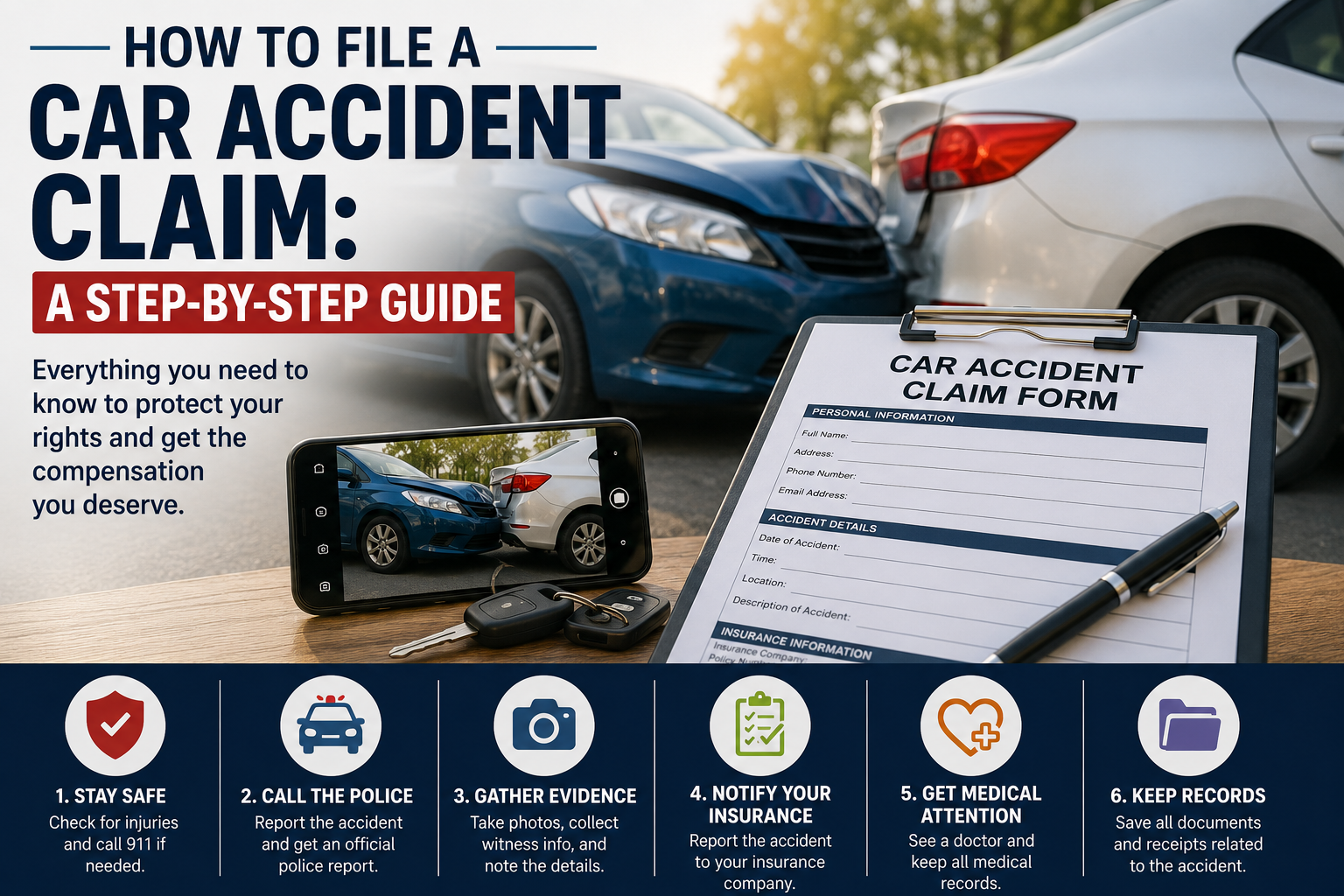
A car accident can happen in seconds, but the decisions you make afterward can affect your finances, health, and legal rights for months or even years. Whether it’s a minor fender bender or a serious collision, understanding how to file a car accident claim can help you navigate the process with greater confidence.
Every country and state has its own laws and insurance requirements, but the basic steps for documenting an accident, reporting it, and filing a claim are generally similar. This guide explains the process in simple terms and highlights the mistakes you should avoid along the way.
Why Filing a Car Accident Claim Matters
A car accident claim allows you to seek compensation for losses resulting from a crash. Depending on your situation and local laws, compensation may include:
- Vehicle repair or replacement costs
- Medical expenses
- Lost income
- Rental vehicle costs
- Property damage
- Pain and suffering (where applicable)
Filing your claim promptly also helps preserve evidence and ensures important deadlines are not missed.
Step 1: Prioritize Safety
Immediately after an accident:
- Check yourself and others for injuries.
- Move to a safe location if possible.
- Turn on your hazard lights.
- Call emergency services if anyone is injured or if required by local law.
Never leave the scene unless your safety is at risk or emergency responders instruct you to do so.
Step 2: Contact the Police
Many accidents require an official police report, especially when there are injuries, significant property damage, or disputes over who caused the crash.
When officers arrive:
- Answer questions honestly.
- Stick to the facts.
- Avoid guessing or admitting fault.
The police report often becomes an important piece of evidence during the claims process.
Step 3: Gather Evidence
Strong documentation can make a significant difference when filing an insurance claim.
Collect:
- Photos of all vehicles involved
- Pictures of road conditions and traffic signs
- Damage to vehicles
- Visible injuries
- License plate numbers
- Driver’s license information
- Insurance details
- Contact information for witnesses
The more evidence you have, the easier it may be to explain what happened.
Step 4: Notify Your Insurance Company
Report the accident as soon as reasonably possible.
Provide:
- Date and time of the accident
- Location
- Description of events
- Photos and supporting evidence
- Police report number (if available)
Many insurers now allow claims through mobile apps or online portals, making the reporting process faster.
Step 5: Seek Medical Attention
Some injuries, such as whiplash or internal trauma, may not appear immediately after a collision.
Even if you feel fine:
- Visit a healthcare professional if recommended.
- Keep copies of medical records.
- Save receipts for treatment and medication.
- Follow your doctor’s treatment plan.
Medical records help establish the connection between the accident and your injuries.
Step 6: Keep Every Important Document
Create a dedicated folder for your claim that includes:
- Accident report
- Insurance correspondence
- Repair estimates
- Medical records
- Medical bills
- Rental car receipts
- Photos
- Witness information
Well-organized records can save time if questions arise later.
Step 7: Cooperate With the Claims Investigation
After receiving your claim, the insurance company may:
- Review accident reports
- Examine vehicle damage
- Speak with witnesses
- Request additional documents
- Evaluate repair estimates
Respond promptly to reasonable requests and keep copies of everything you submit.
Common Mistakes to Avoid
Many people accidentally weaken their claim by making avoidable mistakes.
Try not to:
- Delay reporting the accident.
- Ignore medical treatment.
- Throw away receipts.
- Post accident details on social media.
- Admit fault before the investigation is complete.
- Accept the first settlement offer without understanding your options.
Taking your time to review documents carefully can help prevent future complications.
How Long Do You Have to File a Claim?
Deadlines vary depending on where the accident occurred.
Important time limits may include:
- Reporting the accident to your insurance company.
- Filing an insurance claim.
- Filing a personal injury lawsuit.
- Reporting the accident to government authorities when required.
Missing these deadlines may affect your ability to recover compensation, so always check the laws and insurance requirements that apply in your location.
When Should You Consider Legal Advice?
Not every accident requires a lawyer. However, professional legal guidance may be helpful if:
- Someone suffered serious injuries.
- Liability is disputed.
- Multiple vehicles were involved.
- The insurance company denies your claim.
- A settlement offer appears unfair.
- The accident involved commercial vehicles or rideshare services.
A qualified legal professional can explain your rights based on your jurisdiction and circumstances.
Frequently Asked Questions
Do I need a police report to file an insurance claim?
Not always. Requirements depend on local laws and your insurance policy, but a police report can strengthen your claim.
What if the other driver has no insurance?
Many insurance policies include uninsured or underinsured motorist coverage, although availability depends on your insurer and local regulations.
Should I repair my car before the insurance inspection?
In most cases, wait until your insurer has documented the damage unless immediate repairs are necessary for safety.
Can I file a claim if the accident was partially my fault?
Some jurisdictions allow compensation even when multiple parties share responsibility. The rules differ by location.
Final Thoughts
Knowing how to file a car accident claim can reduce stress after an unexpected collision. Acting quickly, documenting the scene, seeking medical attention when needed, and keeping accurate records can make the claims process smoother.
Because insurance laws and legal deadlines differ across states and countries, always verify the specific rules that apply where the accident occurred. If your case involves serious injuries, disputed liability, or complex legal questions, consider consulting a qualified legal professional for advice tailored to your situation.
Disclaimer: This article is provided for general informational purposes only and should not be considered legal advice. Laws, insurance regulations, and filing deadlines vary by jurisdiction.