


Academic success is not only about intelligence or natural talent. Many successful students simply follow effective habits that help them stay focused, organized, and motivated throughout their learning journey. Whether you are in school, college, or preparing for competitive exams, building the right study habits can make a major difference in your results.
In today’s fast-paced world, students often struggle with distractions, poor time management, and information overload. The good news is that improving academic performance does not require studying all day. Instead, it requires a smarter and more balanced approach.
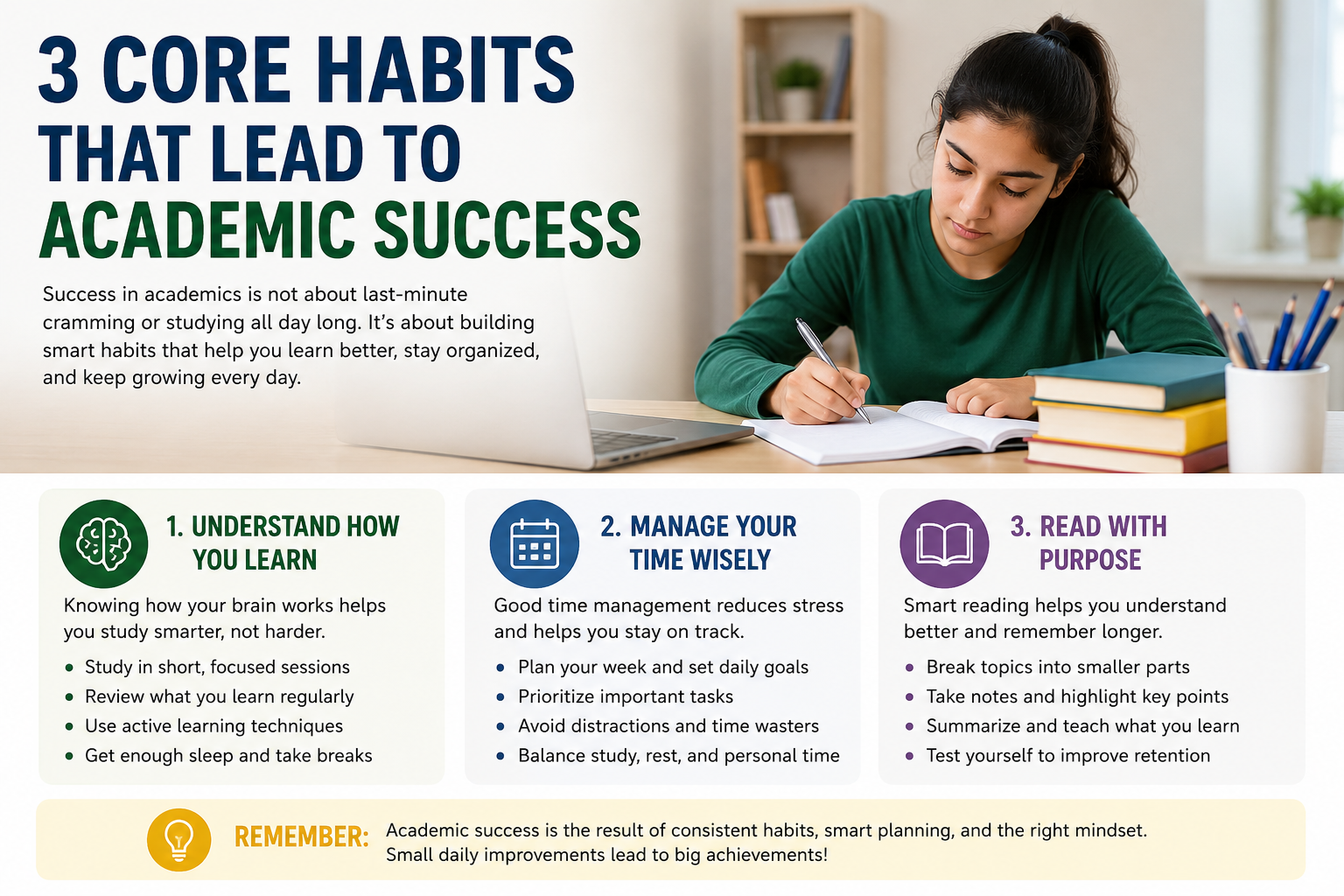
Here are three essential habits that can help students perform better academically and reduce unnecessary stress.
1. Learn How Your Brain Works
One of the biggest mistakes students make is trying to study for long hours without breaks. The human brain is not designed to stay highly focused for endless periods. Concentration naturally decreases over time, especially when learning difficult or unfamiliar topics.
Instead of forcing yourself to study continuously, divide study sessions into smaller chunks. Short, focused sessions are usually more effective than long hours of passive reading.
Smart Learning Tips:
- Review important notes within 24 hours after class
- Study in short sessions with small breaks
- Avoid multitasking while studying
- Get enough sleep to improve memory and concentration
- Use active learning methods like quizzes, summaries, or teaching others
Students who understand how memory and focus work can learn faster and remember information for a longer time.
2. Manage Your Time Before It Manages You
Time management is one of the most important skills for academic growth. Many students fail not because they lack ability, but because they wait until the last moment to complete assignments or prepare for exams.
Creating a simple study schedule can reduce stress and increase productivity. When you plan your day properly, you gain better control over your workload and avoid panic before deadlines.
Effective Time Management Strategies:
- Create a weekly study plan
- Set realistic daily goals
- Prioritize difficult subjects first
- Limit social media distractions during study hours
- Balance study time with relaxation and exercise
Consistency matters more than occasional hard work. Even studying a little every day can produce better results than last-minute cramming.
3. Read With Purpose, Not Just Speed
Many students read chapters repeatedly but still struggle to remember key concepts. This happens because passive reading does not fully engage the brain.
To improve understanding and memory, students should interact with the material while reading. Asking questions, taking notes, and summarizing ideas can significantly improve comprehension.
Ways to Improve Reading and Retention:
- Break large chapters into smaller sections
- Highlight only important information
- Write short summaries after reading
- Discuss topics with classmates or friends
- Test yourself instead of only rereading notes
Active reading helps students stay focused and prepares them better for exams, assignments, and classroom discussions.
Why Academic Success Is About Habits
Successful students are not always the smartest people in the classroom. In many cases, they are simply more disciplined, organized, and consistent with their learning routines.
Building strong academic habits takes time, but small improvements every day can lead to major long-term results. Students who learn effectively, manage their time wisely, and stay engaged with their studies are more likely to achieve their educational goals.
Academic success is not about perfection. It is about continuous improvement, smart planning, and developing habits that support long-term learning.
Final Thoughts
Every student faces challenges during their academic journey. However, success becomes much easier when you focus on the right strategies instead of relying only on hard work.
By understanding how learning works, managing time properly, and improving reading habits, students can boost their performance while reducing stress and burnout.
The key is consistency. Small daily efforts often create the biggest academic achievements over time.
Source inspiration: Study and Time Management Skills for College Success